What does surging mortgage arrears mean for Toronto condo buyers right now?
Canadian mortgage arrears just hit a 10-year high, up 89% from pandemic lows according to Canadian Bankers Association data reported by BetterDwelling on April 24, 2026. For Toronto condo buyers, this creates two distinct realities: more motivated sellers in some buildings, and early warning signals of financial stress in others. The status certificate is how you tell which is which.
What the arrears data actually says
The CBA February 2026 figures show that mortgage delinquency rates, while rising sharply in percentage terms, are climbing from an unusually suppressed base. Pandemic-era payment deferrals and record-low rates held arrears at artificial lows through 2020 and 2021. The current rise is real, but it reflects normalization as much as it reflects distress.
BetterDwelling's April 23 report on the broader Canadian market adds useful context: regional performance is uneven. Some markets are seeing sharp price corrections while others, like Nova Scotia, posted price increases of $13,000 in a single month. Toronto's condo segment sits somewhere in the middle, with high inventory, softening prices, and selective pockets of stress.
The macro story is interesting. The building-level story is what actually matters to a buyer writing a six-figure cheque.
Where distressed listings are appearing in Toronto condos
Not all Toronto condo buildings are equally exposed to owner financial stress. The highest concentration of financially stretched owners tends to cluster in specific conditions: buildings that completed in 2022 and 2023 after being sold pre-construction at 2019 to 2021 prices, buildings with investor-heavy ownership where rental income no longer covers carrying costs, and older towers with deferred maintenance that required recent special assessments.
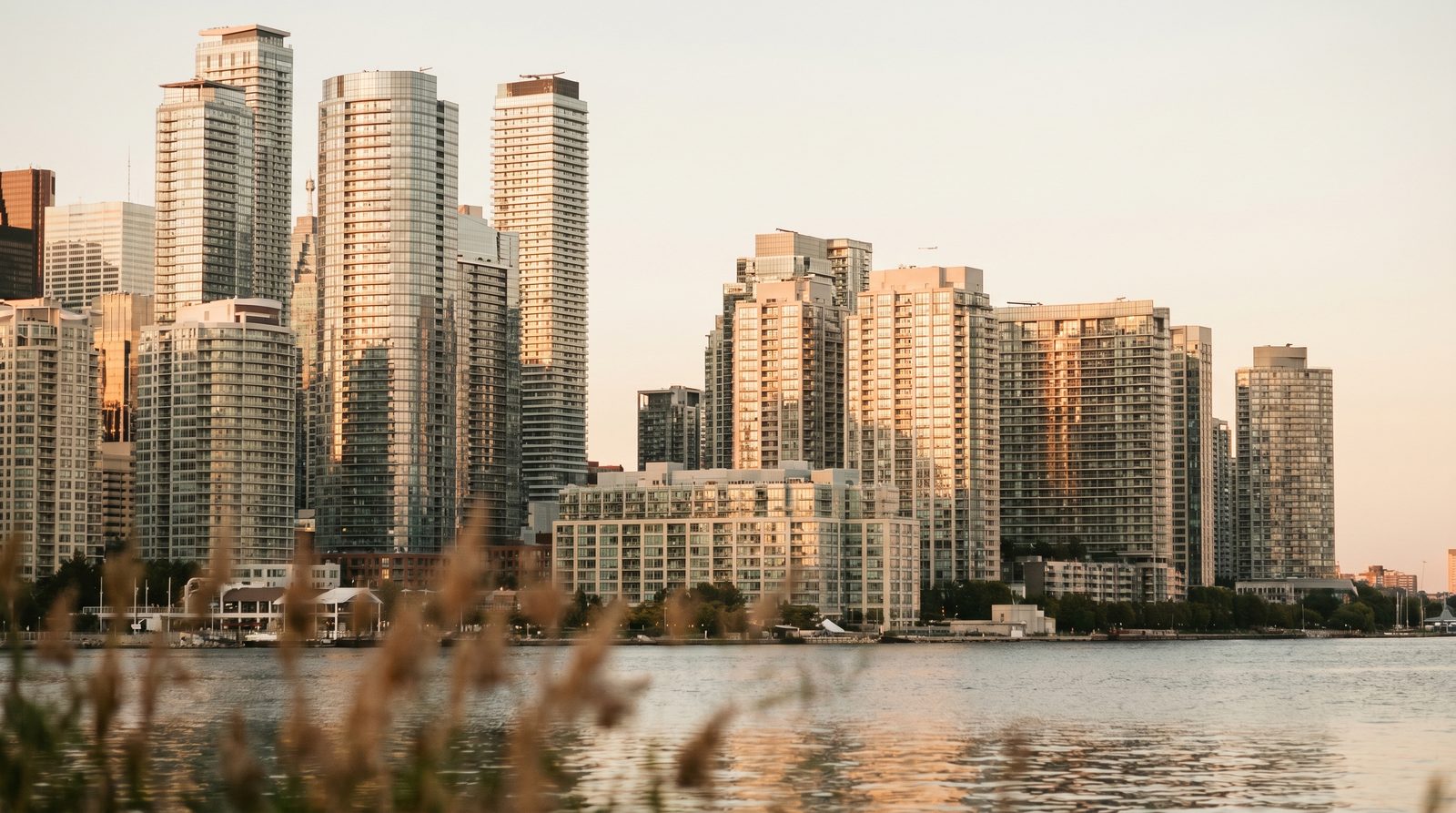
In waterfront terms, CityPlace and parts of East Bayfront, where a large share of units were purchased by investors rather than owner-occupiers, have more distressed listings than established buildings along Harbourfront proper or in Humber Bay Shores. That doesn't mean CityPlace is off the table. It means a buyer looking there should run tighter due diligence on building finances before getting excited about a below-ask price.
The Harbourfront vs Humber Bay Shores vs East Bayfront comparison is worth reading alongside this data, because each neighbourhood has a materially different ownership composition and that affects how arrears-driven stress shows up in individual buildings.
How arrears show up in the status certificate
This is where macro news becomes actionable buying intelligence. When a building has overleveraged owners, some of those owners stop paying their monthly condo fees before they stop paying their mortgage. Unpaid common expenses drain the reserve fund and shift the cost burden onto the remaining owners.
The status certificate discloses the percentage of units with unpaid common expense fees. Ontario condos are required to include this. A building where 1-2% of units are in arrears on fees is within normal range. Above that, the number warrants a direct question to the property manager about collection timelines and whether the shortfall is affecting the reserve fund's target balance.
A building where the reserve fund is underfunded and common fee arrears are rising is a building where a special assessment is a real possibility in the next two to five years. That's not a reason to walk from every distressed-looking listing, but it is a reason to read the reserve fund study alongside the status certificate before you make any offer.
The status certificate guide and the reserve fund study explainer both walk through exactly what to look for. Read them as a pair when you're evaluating a building where price softness might be telling you something.
Does a distressed seller mean a better deal?
Sometimes. A seller under financial pressure often has a shorter timeline and less patience for holding out on price. In the current Toronto condo market, that can translate to 3-8% below asking in buildings where comparable sales support a lower value, or meaningful flexibility on closing dates and conditions.
But the discount has to be evaluated against what you're buying into. A 7% discount on a unit in a building facing a $15,000-per-unit special assessment in the next 18 months is not a deal. It's a wash at best. This is why the building's financial health matters as much as the seller's motivation.
A genuinely distressed seller in a well-run, owner-occupied, fully funded building is a different situation entirely. That's where the current arrears environment creates real opportunity. Soft market, motivated seller, healthy building. Those combinations exist. Finding them requires more than a Realtor.ca search.
What to check before calling a low price a bargain
Before treating any soft listing price as a buying opportunity in the current environment, run this checklist:
Request the status certificate and look specifically at common expense arrears, the reserve fund balance versus the reserve fund study target, and any disclosed or pending special assessments. If the study shows the fund is less than 70% of its target balance, that gap has to be funded somehow.
Check maintenance fee history for the building over the last three years. Fees rising faster than inflation, consistently, usually mean the building is catching up on deferred costs. A building with fees increasing 6-8% annually for three straight years is catching up on something. That's not automatically disqualifying, but it needs an explanation. The Toronto condo maintenance fees guide explains how to read that trend in context.
Look at the ownership composition. If the building is more than 60-70% investor-owned, the financial stress from rising arrears is concentrated there. Owner-occupied buildings tend to have more stable fee collection histories.
The practical buyer's position right now
Rising arrears are real. They're not a catastrophe signal and they're not a green light. They're a sorting mechanism. In buildings with healthy finances and motivated sellers, buyers who do the due diligence have more room to negotiate than they did in 2021 or 2022. In buildings where the ownership pool is under financial stress, a discounted listing can be a poorly priced problem rather than a deal.
If you're shopping Toronto's waterfront right now, the current state of the GTA condo market for buyers gives you the inventory and pricing context to understand where you have room and where you don't. Then the status certificate tells you whether the specific building you're looking at is an opportunity or a warning.
The macro data makes the case that it's worth paying close attention right now. The building-level data tells you whether that attention pays off.
FAQ
What are mortgage arrears and why do they matter for Toronto condo buyers?
Mortgage arrears occur when homeowners fall behind on payments. Rising arrears push distressed sellers into the market, softening prices and expanding negotiating room. In Toronto condos, high arrears in a single building can also signal overleveraged ownership, which shows up in the status certificate as unpaid common fees.
Are distressed condo listings appearing in Toronto's waterfront neighbourhoods?
Distressed listings are more concentrated in buildings with investor-heavy ownership, particularly post-2021 pre-construction completions in CityPlace and East Bayfront. Established owner-occupied buildings along Harbourfront and Humber Bay Shores have shown more price stability.
How do rising arrears show up in a condo's status certificate?
The status certificate discloses the percentage of units with unpaid common expense fees. A building where more than 1-2% of units are in arrears is a yellow flag. It may indicate financial stress among owners, which weakens the reserve fund and raises the risk of a special assessment.
Does a distressed seller mean a better price for the buyer?
Sometimes. A motivated seller under financial pressure may accept below-ask offers or more favorable conditions. But the building still matters. A discounted unit in a financially stressed building can still be a bad deal if a special assessment or reserve fund shortfall is imminent.
What's the difference between a distressed listing and a fairly priced listing in the current Toronto condo market?
A distressed listing is priced to sell fast, often below recent comparable sales in the same building. A fairly priced listing reflects current market conditions without urgency. Buying a distressed unit in a healthy building is an opportunity. Buying one in a troubled building is a trap.
Should Toronto condo buyers be worried or optimistic about rising mortgage arrears?
Neither extreme. Rising arrears create selective buying opportunities in buildings with healthy finances. They're a caution signal in buildings with investor-heavy ownership, aging infrastructure, or deferred maintenance. The status certificate tells you which situation you're in before you close.
Emma Pace, North Group Real Estate — Toronto waterfront condo specialist.