Is buying a condo in Toronto's Distillery District actually worth it?
The Distillery District delivers something almost no other Toronto neighbourhood can: genuine heritage character, a pedestrian-only core, and a street-level experience that doesn't feel like it was designed by a condo developer. What it doesn't always deliver is strong reserve funds, clear lake sightlines, or maintenance fees that stay predictable. Worth it depends entirely on which building you're in and which floor you're on.
What you actually get in the Distillery District
The neighbourhood itself is hard to argue with. The historic Gooderham and Worts distillery complex is one of the best-preserved Victorian industrial sites in North America. The pedestrian-only brick lanes, the gallery and restaurant mix, the Christmas market foot traffic, all of it creates an ambient quality that buyers genuinely feel when they walk through.
Walkability is real here. The area scores well on transit access with the 504 King streetcar, and the city's cycling infrastructure has improved considerably along Cherry and Parliament. The Distillery is also positioned at the edge of the Canary District, which has added newer purpose-built towers and a broader range of price points over the last decade.
The Distillery's identity is stable in a way that many Toronto neighbourhoods aren't. It doesn't feel like it's going to turn into something unrecognizable in 10 years. That stability has a value in the resale equation that doesn't always show up in the per-square-foot numbers.
What you pay for, and what the price is buying you
Distillery District units command a neighbourhood premium. The heritage character, the low-density pedestrian core, and the strong brand recognition mean you're paying above what comparable square footage costs in East Bayfront or Canary District proper.
Whether that premium is justified depends on the specific unit. A high-floor, south-facing unit in a purpose-built tower like Canary House or one of the newer Cherry Street buildings is buying you a clean building structure, a more predictable fee trajectory, and proximity to the character without inheriting the mechanical risk of an older conversion.
A loft unit in one of the original heritage conversions, say a Pure Spirit or an older Trinity Street building, is a different calculation. You're buying exposed brick, soaring ceilings, and a unit type that resales well to a specific buyer profile. But you're also buying into a building where the original mechanical systems are 20-plus years old and the reserve fund study may be telling a story that the listing description isn't.
Pricing in the Distillery currently ranges from roughly $750-$850 per square foot for older stock to $900-$1,100 for newer purpose-built units with premium finishes. The gap between those numbers is real, but so is the difference in maintenance-fee risk.
The maintenance fee problem you need to understand before you offer
Heritage-converted buildings have structural fee risk that purpose-built towers don't. When the Gooderham and Worts buildings were converted to residential use, the mechanical and building envelope systems were integrated into 19th-century structures. Those systems age on their own schedule, and when they need replacement, the cost gets spread across fewer units than in a large modern tower.
Toronto condo fees in the $0.55-$1.00 per square foot per month range are normal. Distillery heritage buildings frequently land above $1.00 and some exceed $1.20. That's not automatically disqualifying, but it should trigger a specific set of questions. What does the reserve fund study say about the 10-year capital plan? What has the fee increase rate been over the last five years? Has there been a special assessment, and if so, was the underlying problem actually resolved?
The status certificate is non-negotiable in this neighbourhood. Read the reserve fund balance relative to the study's target, not just the raw dollar figure. A building with $2 million in reserve sounds healthy until you read the study showing it needs $4 million in capital work over the next five years.
Special assessments are a real risk in aging Toronto condo buildings, and heritage conversions are near the top of the risk category. This doesn't mean don't buy here. It means buy in a building where you've actually read the numbers, not one where you're trusting that the fee looks fine.
The lake view reality check
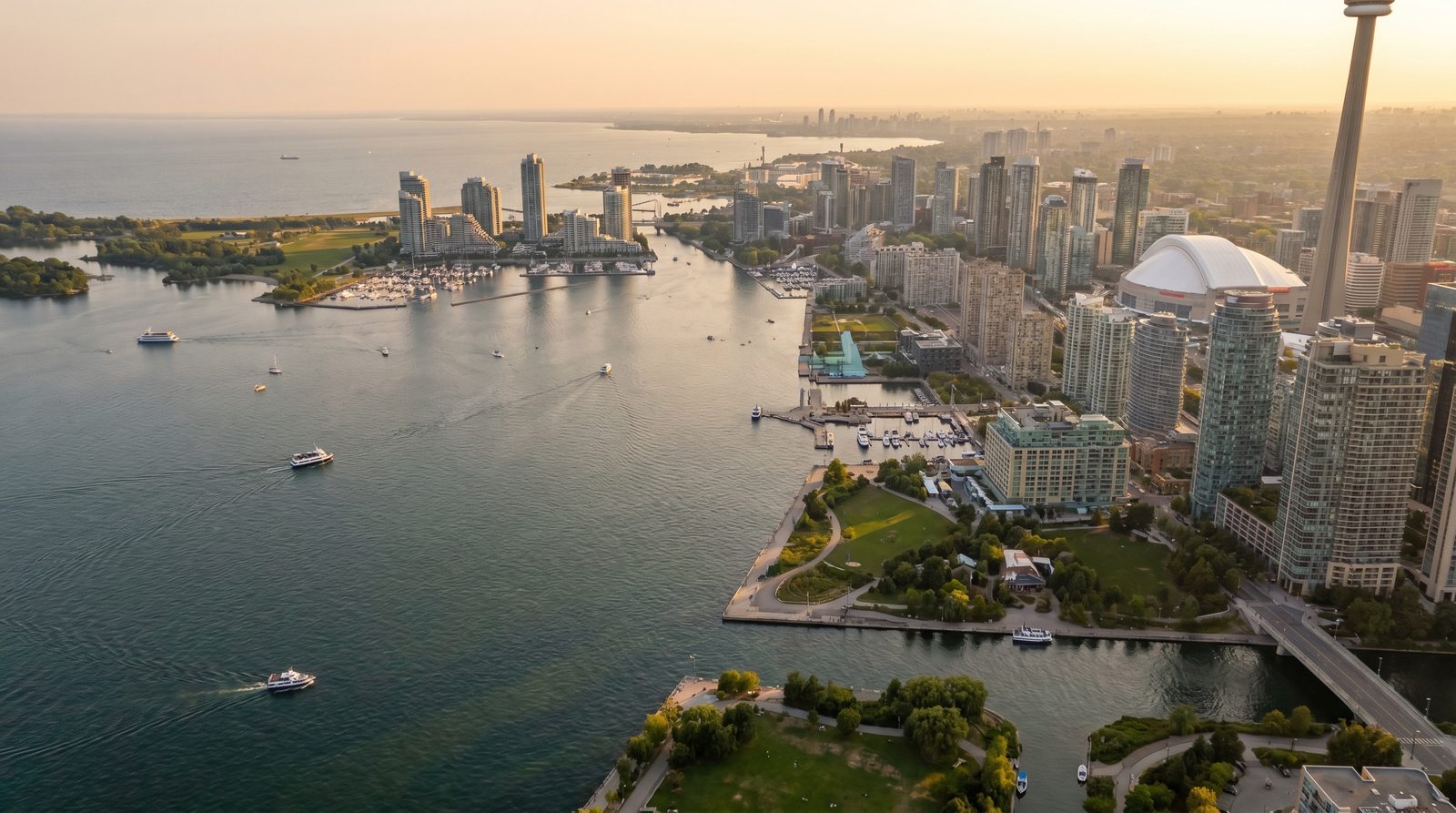
Most Distillery District condos don't have lake views. The neighbourhood sits roughly 800 metres north of Lake Ontario, and between the Distillery and the water you have the elevated Gardiner Expressway, several mid-rise East Bayfront and West Don Lands developments, and a growing number of approved-but-unbuilt towers along Cherry and Lake Shore.
A small number of high-floor, south-facing units in the taller Canary District towers have partial south views. Some capture a slice of lake over the lower East Bayfront buildings. But if unobstructed water views are a priority, the Distillery is generally not the neighbourhood to be shopping. That's a more honest search in Harbourfront, Humber Bay Shores, or East Bayfront's waterfront edge. The difference between a genuine lake view and what gets marketed as one is covered in detail here.
If you're buying in the Distillery for character and walkability rather than water, that's a completely defensible position. Just don't let a listing's directional language convince you that south-facing means lake-view in this location.
Parking, and why it's a bigger issue than buyers expect
The Distillery's heritage bones were built before the automobile existed. The neighbourhood's parking infrastructure has never caught up. Owned parking spots in Distillery buildings are valuable and limited. Many units, especially in older heritage conversions, don't include parking and can't add it.
Visitor parking is limited enough that it creates friction in daily life. If you regularly have guests, own a car, or work somewhere that requires driving, the parking situation at the specific building you're buying matters. Don't assume it's fine. Ask the question directly, verify what the building offers, and factor a dedicated spot's value into your offer math if the unit doesn't include one.
If you're car-free, this issue largely disappears, and the neighbourhood's transit and cycling access makes car-free living practical.
Which buildings are worth the closer look
Purpose-built towers in and adjacent to the Distillery tend to have cleaner due diligence profiles. Canary House and Canary Park, the newer Cherry Street towers, and buildings developed post-2010 generally have better-funded reserves and more predictable fee structures. They lack some of the heritage character of the converted loft buildings, but they also lack the mechanical risk.
For the heritage conversion experience, Pure Spirit and the original Trinity Street loft conversions are the most sought-after product types. Units in these buildings resale well to buyers who specifically want that loft aesthetic. But the due diligence bar is higher, and the fee trajectory needs scrutiny that a 10-minute listing review won't give you.
390 Cherry sits in a middle position: newer than the heritage conversions but with a character that purpose-built towers in other neighbourhoods lack. It's worth looking at as a balance point.
FAQ
Are Distillery District condos a good investment?
Distillery District condos hold value well due to low supply and strong neighbourhood identity, but resale depends heavily on the specific building. Heritage-converted buildings carry higher maintenance-fee risk than purpose-built towers. Floor, orientation, and building age all affect resale performance significantly.
What are typical maintenance fees in Distillery District condos?
Purpose-built towers in the area run $0.75-$1.20 per square foot per month. Heritage-converted buildings often exceed $1.20 and can trend higher as aging mechanical systems require replacement. Always check the reserve fund study before making an offer.
Do Distillery District condos have lake views?
Most don't. The Distillery sits roughly 800 metres north of Lake Ontario, and intervening buildings and the elevated Gardiner block sightlines on most floors and orientations. A small number of high-floor, south-facing units in taller buildings have partial lake views, but true unobstructed water views are rare in this neighbourhood.
Is parking scarce in the Distillery District?
Yes. Parking is one of the Distillery's most consistent buyer complaints. Many buildings have limited visitor parking, and owned spots trade at a premium. If you own a car, verify the parking situation for each specific building before proceeding.
Which Distillery District condo buildings are worth considering?
Purpose-built towers like Canary House, Canary Park, and the newer Cherry Street buildings tend to have cleaner fee structures and better-funded reserves than older heritage conversions. Pure Spirit and the original Trinity Street loft buildings are more character-rich but require closer scrutiny of their reserve fund studies and fee trend lines.
What should I check in the status certificate for a Distillery District condo?
Focus on three things: the reserve fund balance relative to the study's target, any special assessments in the last three years, and the maintenance fee increase history over the last five years. Heritage buildings with mechanical systems over 20 years old are the highest-risk category.
Emma Pace, North Group Real Estate — Toronto waterfront condo specialist.